Two critical PHP vulnerabilities highlight why proactive security, rapid response, and a unified approach to network protection matter more than ever.
Introduction to Malware Binary Triage (IMBT) Course
Looking to level up your skills? Get 10% off using coupon code: MWNEWS10 for any flavor.
Enroll Now and Save 10%: Coupon Code MWNEWS10
Note: Affiliate link – your enrollment helps support this platform at no extra cost to you.
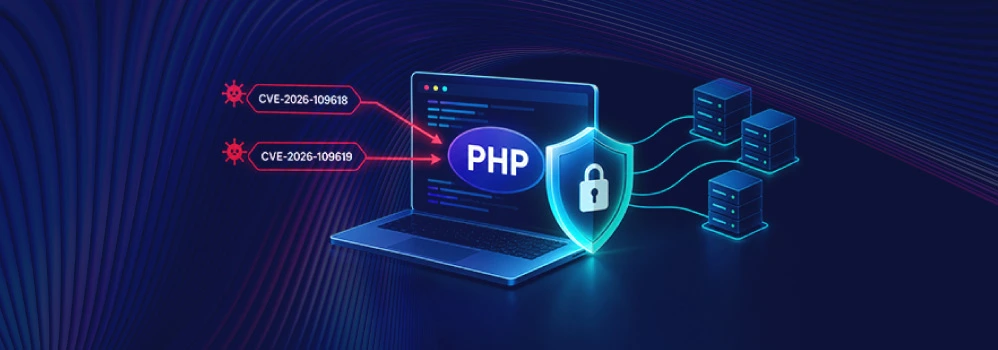
Cybersecurity threats continue to evolve, and newly discovered vulnerabilities in widely used technologies can create immediate risks for organizations worldwide.
The recent disclosure of two critical vulnerabilities in PHP, a programming language powering millions of websites and business applications, is a reminder of how quickly security risks can emerge—and why organizations need a proactive, multilayered defense strategy.
At Aryaka, protecting our customers is a fundamental part of how we design, deliver, and operate our Unified SASE as a Service platform. Following the disclosure, our security teams assessed our products and services, evaluated potential exposure, and took proactive measures to strengthen customer protection.
The key takeaway: Aryaka’s SD-WAN and Unified SASE services are not impacted by these vulnerabilities, and additional Intrusion Detection and Prevention System (IDPS) capabilities have been deployed for customers with IPS enabled.
What Are the Recent PHP Vulnerabilities?
On October 21, 2026, the PHP development team released emergency security updates addressing two critical vulnerabilities:
- CVE-2026-109618: A memory-handling vulnerability that could allow an attacker to execute malicious code remotely.
- CVE-2026-109619: A vulnerability involving previously freed memory that can potentially enable unauthorized remote code execution.
Both vulnerabilities carry a critical severity rating of 9.2 under CVSS v4.0.
In simple terms, these vulnerabilities could allow attackers to execute code on an affected web server without first authenticating. Attackers may exploit PHP vulnerabilities through crafted HTTP requests to execute code remotely, steal sensitive data, deploy web shells or malware, and compromise connected systems. AI can accelerate these attacks by identifying exploitable code paths and generating or adapting proof-of-concept exploits, lowering the barrier to exploitation. Exploitability depends on the affected PHP version, runtime configuration, and deployment architecture.
Because PHP is widely used in web applications, the potential exposure extends across industries, including financial services, manufacturing, retail, healthcare, and technology.
What Does This Mean for Enterprises?
For organizations operating distributed applications and hybrid cloud environments, vulnerabilities like these can present significant challenges.
An exposed application could become an entry point for attackers. Once inside, attackers may attempt to access sensitive information, disrupt services, or move deeper into an organization’s infrastructure.
Three areas deserve particular attention:
1. Business continuity: Compromised web applications can disrupt customer-facing services and critical business operations.
2. Data protection: Vulnerable applications may expose sensitive business information, credentials, or customer data.
3. Security operations: Distributed environments can make it difficult for IT teams to identify vulnerable systems, coordinate remediation, and maintain consistent security policies.
These risks reinforce an important principle: effective cybersecurity requires more than reacting to individual vulnerabilities. It requires visibility, layered protection, and the ability to respond quickly.
Aryaka’s Security Stance: Proactive Protection, Not Just Reactive Response
At Aryaka, security is embedded into our network architecture, services, and operational practices.
Following the disclosure of CVE-2026-109618 and CVE-2026-109619, Aryaka conducted a security assessment across its product portfolio and supporting infrastructure.
Our assessment and response confirm the following:
- Aryaka SD-WAN and Unified SASE services are not impacted. This includes ANAP edge devices, Secure Web Gateway captive portal and block pages, Aryaka ZTNA, Managed VPN–NCP, and the MyAryaka customer portal.
- Potential PHP exposure has been assessed and remediated. Aryaka evaluated its products, services, and supporting infrastructure and addressed instances where PHP was present.
- Additional intrusion detection and prevention protections have been deployed. Updated IDPS signatures have been deployed to all Unified SASE customer sites with IDPS enabled, helping detect known exploit attempts associated with these vulnerabilities.
- No known exploitation against Aryaka products. As of our October 23 advisory, Aryaka is not aware of malicious exploitation of these vulnerabilities against Aryaka products.
These actions reflect our commitment to continuously evaluating emerging threats and protecting the services our customers rely on.
For complete details, including product-specific status and technical updates, visit the Aryaka Security Advisory on our Trust Center.
Why Unified SASE Matters When New Vulnerabilities Emerge
The PHP vulnerabilities highlight a broader cybersecurity challenge: enterprises need to protect users, applications, and data across increasingly distributed environments.
Aryaka’s Unified SASE as a Service helps organizations strengthen their security posture through several integrated capabilities:
- Integrated threat protection: Next-generation firewall and intrusion prevention capabilities help identify and control suspicious network activity. Updated IPS signatures can provide an additional detection layer while organizations address vulnerable applications.
- Consistent security enforcement: Aryaka’s OnePASS
 Architecture brings networking and security together, enabling distributed policy enforcement across connected enterprise locations.
- Zero Trust WAN: Aryaka’s private global network and integrated security architecture help organizations securely connect distributed users, sites, and applications.
- Simplified visibility and operations: Centralized observability through MyAryaka helps network and security teams manage their environments more effectively.
- Flexible security operations: With self-managed, co-managed, and fully managed delivery options, enterprises can choose how they operate their networking and security services.
No single security technology eliminates every vulnerability. But a unified, defense-in-depth approach can help organizations reduce exposure, improve visibility, and respond more effectively when new threats emerge.
What Should Customers Do Now?
While no customer action is required for the affected Aryaka services, organizations operating their own PHP-based applications should take the following steps:
- Identify potentially vulnerable applications. Review internet-facing and internal web applications that use PHP, including applications operated by third parties.
- Apply security updates immediately. Upgrade affected PHP installations to the appropriate fixed release: 8.5.12, 8.4.27, 8.3.36, or 8.2.35, or use verified vendor-supported security backports.
- Review security monitoring and IDPS coverage. Confirm that relevant protections are enabled and investigate suspicious application activity. Aryaka customers with IPS enabled already benefit from the updated signatures deployed for these threats.
- Limit exposure where patching is delayed. Restrict access to vulnerable services or isolate them until remediation is complete. Network controls are additional safeguards, not substitutes for patching.
- Stay informed. Monitor vendor advisories and the Aryaka Trust Center for further updates.
Security is a Continuous Commitment
The latest PHP vulnerabilities demonstrate how quickly the threat landscape can change. They also reinforce the importance of building security into the network rather than treating it as an afterthought.
At Aryaka, our commitment extends beyond delivering secure connectivity. It includes continuously evaluating emerging threats, maintaining defense-in-depth security posture, and communicating transparently with customers.
Our goal is simple: help customers stay connected, productive, and better protected—even as the threat landscape evolves.
For the latest information on these vulnerabilities and Aryaka’s response, visit our Trust Center Security Advisory.
For additional assistance, contact [email protected].
Aryaka Unified SASE as a Service — Performance. Agility. Simplicity. Security. Without tradeoffs.
The post Critical PHP Vulnerabilities: What You Need to Know and How Aryaka Is Protecting Customers appeared first on Aryaka.
Article Link: Critical PHP Vulnerabilities: Aryaka’s Security Response